

The oldest heart we have discovered is 380 million years old
Amazing find by paleontologists
A fossil of one of the oldest vertebrate creatures on the planet, hid a surprise inside! The 380-million-year-old fossil of the armored fish belonging to the Arthrodir family contained the fish’s heart, stomach, intestines and liver.
Soft tissues are extremely rare to preserve as a fossil, as they decompose before the fossilization process begins. Paleontologists were able to study the anatomy of the heart in three dimensions without having to take the precious object apart. The heart was in excellent condition and the cardiac atrium, ventricle and outflow tract were distinct.
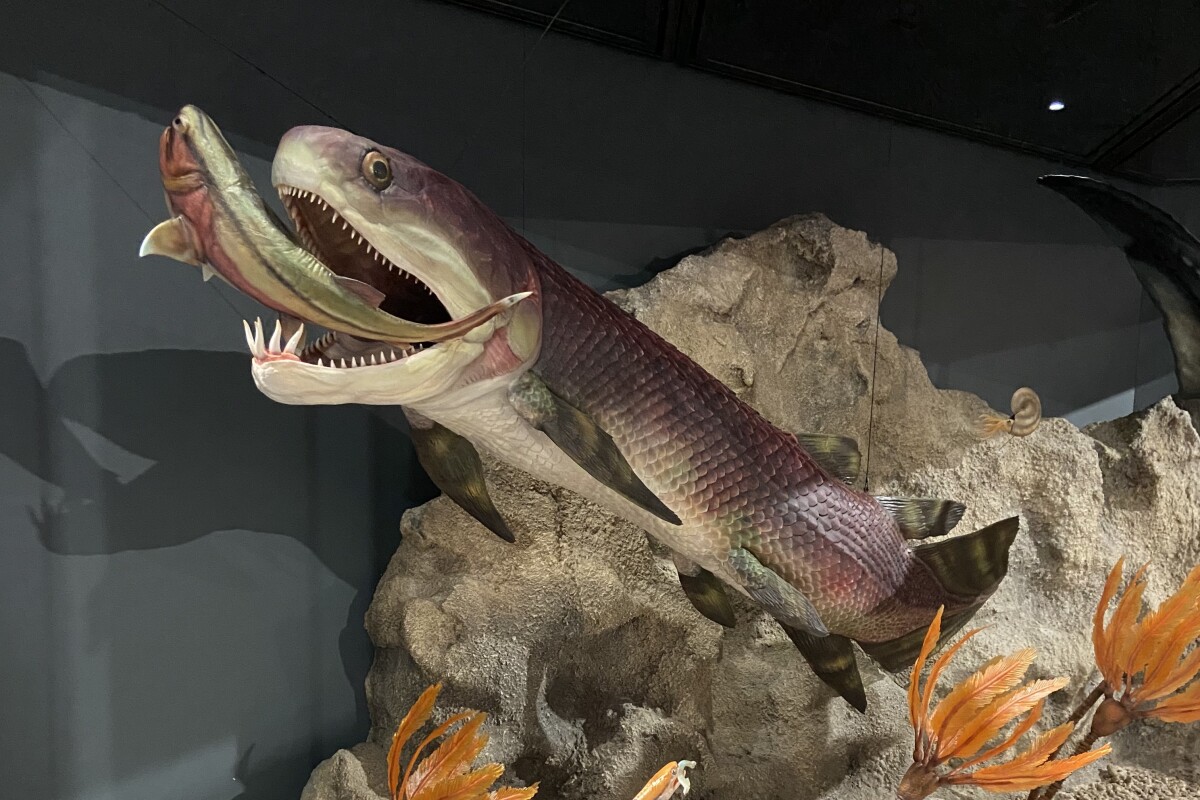
The heart was S-shaped and consisted of two chambers, with the smaller one above the larger one, surprising paleontologists with its complexity and giving valuable information about the evolution of the head and neck regions and how they changed to accommodate the fish jaws.
As a paleontologist who has been studying fossils for over 20 years, it was a real surprise to find a 3D and perfectly preserved heart in a 380 million year old ancestor. Evolution is often thought of as a series of small steps, but these ancient fossils show that there was a jump between jawed and non-jawlike vertebrates. These fish literally have their hearts inside their mouths and under their gills – just like sharks today.


For the first time we can see all the organs together in a primitive fish and we are surprised by the fact that they are not so different from us. However there is one important difference – the liver was large and allowed the fish to float, like sharks today. The lack of evidence for lungs suggests that these fishes evolved independently of other vertebrate fishes in later periods. The new discovery of soft tissues in these primitive fishes is truly every paleontologist’s dream and they are without a doubt the best preserved in the world for this era.
The research was published in Science .


